

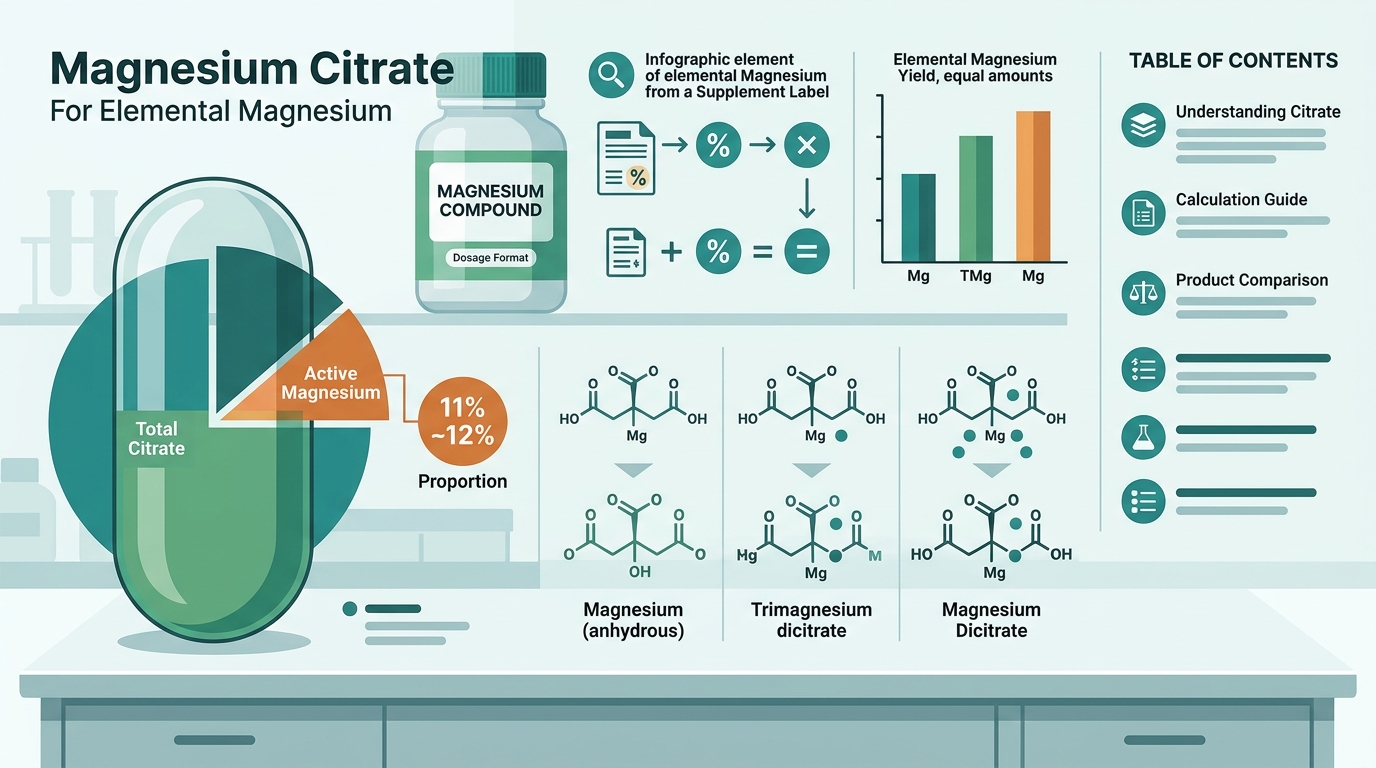
Elemental magnesium is the active mineral portion of a magnesium citrate supplement. In standard magnesium citrate, this active portion typically represents about 11% to 12% of the total compound weight. This guide explains how to calculate elemental magnesium from label claims, compares common citrate forms, and clarifies supplement labeling rules for consumers.
Elemental Magnesium Percentage
Understanding the difference between total compound weight and active mineral content is critical for accurate dosing. Magnesium citrate is a salt formed by combining magnesium with citric acid. The molecular weight of the entire compound is significantly higher than the magnesium atom itself. This difference dictates the percentage of elemental magnesium present in any given dose.
Calculating the Active Mineral
Chemical analysis shows that magnesium citrate contains approximately 11.2% to 11.8% elemental magnesium by weight. This means that a 1,000 mg capsule of magnesium citrate powder provides only about 112 mg to 118 mg of actual magnesium. The remaining weight consists of the citrate molecule and any other ingredients in the capsule. Consumers often confuse the total weight of the salt with the amount of the mineral they are actually ingesting.
Why the Percentage Matters
The percentage of elemental magnesium determines how many capsules are required to meet daily nutritional needs. The National Institutes of Health (NIH) sets recommended daily allowances for magnesium based on age and sex. For most adult men, the recommended intake is 400 to 420 mg per day. For adult women, it is typically 310 to 320 mg per day. If a supplement provides 112 mg of elemental magnesium per capsule, a man would need to take approximately four capsules to reach the upper end of the recommended range. This calculation is essential for avoiding under-dosing or exceeding safe limits.
Comparison of Common Magnesium Salts
Different magnesium salts have different elemental percentages. Magnesium oxide, for example, contains a much higher percentage of elemental magnesium, often around 60%. However, magnesium oxide is less soluble and may be absorbed less efficiently than citrate. Magnesium glycinate typically contains around 14% to 15% elemental magnesium. The table below compares the elemental magnesium content of common forms to help you understand the differences.
| Magnesium Form | Approximate Elemental % | Elemental Mg in 1,000 mg Dose |
|---|---|---|
| Magnesium Citrate | 11.2% - 11.8% | 112 mg - 118 mg |
| Magnesium Glycinate | 14% - 15% | 140 mg - 150 mg |
| Magnesium Oxide | ~60% | ~600 mg |
| Magnesium Malate | ~14% | ~140 mg |
Magnesium Citrate Forms
Magnesium citrate is available in several physical forms, each with distinct characteristics that affect absorption and user experience. The most common forms are powder, capsules, and tablets. Each form delivers the same elemental magnesium percentage, but the delivery mechanism can influence how the body processes the mineral. according to LinkedIn Wikipedia
Powder Form
Magnesium citrate powder is a fine, white substance that can be mixed into water or other beverages. This form allows for flexible dosing, as users can measure out specific amounts. Powder is often more cost-effective per serving than capsules. However, it may have a slightly acidic taste due to the citric acid component. Some users prefer powder because it dissolves quickly and does not require swallowing large pills.
Capsule Form
Capsules are a popular choice for those who prefer a convenient, tasteless delivery method. PhiNaturals offers a 400 mg magnesium citrate capsule that provides a specific amount of elemental magnesium per serving. Capsules are typically made from plant-based materials, such as cellulose, making them suitable for vegan consumers. The capsule shell protects the powder from moisture and oxidation until it is ingested. Once in the stomach, the capsule dissolves, releasing the magnesium citrate for absorption.
Tablet Form
Tablets are compressed forms of magnesium citrate, often bound with other ingredients to maintain their shape. Tablets are generally smaller than capsules and may be easier to swallow for some individuals. However, the compression process can sometimes affect the dissolution rate of the mineral. Tablets may contain fillers or binders that are not present in powder or capsule forms. Users should check the ingredient list to ensure they are comfortable with any additional components.
Supplement Labeling
Supplement labels are regulated by the Food and Drug Administration (FDA) to ensure accuracy and transparency. Understanding how to read a supplement label is essential for determining the actual amount of elemental magnesium you are consuming. The label must clearly state the serving size, the amount of the active ingredient per serving, and the percentage of the Daily Value (DV).
Reading the Supplement Facts Panel
The Supplement Facts panel is the primary source of information about a product's contents. Look for the line that lists "Magnesium" or "Magnesium (as citrate)." The number next to this line indicates the amount of elemental magnesium per serving. For example, if the label states "Magnesium 112 mg," this is the amount of active mineral you will receive. The percentage of Daily Value is calculated based on the recommended daily intake for adults. A 112 mg dose typically represents about 27% of the Daily Value for men and about 36% for women.
Identifying the Salt Form
The label must also specify the form of magnesium used. This is usually listed in parentheses after the mineral name, such as "Magnesium (as citrate)." This information is crucial because different salts have different elemental percentages. If a label states "Magnesium Citrate 1,000 mg" but does not specify the elemental content, you must calculate it based on the known percentage of the salt. However, reputable manufacturers will typically list the elemental magnesium amount directly on the label to avoid confusion.
Checking for Additional Ingredients
Supplement labels also list inactive ingredients, such as fillers, binders, and coatings. These ingredients do not contribute to the magnesium content but may affect the product's texture, taste, or absorption. Some individuals may have sensitivities to certain inactive ingredients, such as magnesium stearate or cellulose. It is important to review the full ingredient list to ensure the product aligns with your dietary preferences and health needs. Magnesium guides can provide additional context on common ingredients and their roles in supplement formulations.
Key Takeaways
- Magnesium citrate contains approximately 11.2% to 11.8% elemental magnesium by weight.
- A 1,000 mg dose of magnesium citrate provides about 112 mg to 118 mg of active magnesium.
- The recommended daily intake for adult men is 400 to 420 mg, while for women it is 310 to 320 mg.
- Magnesium citrate is available in powder, capsule, and tablet forms, each with distinct user experiences.
- Supplement labels must clearly state the amount of elemental magnesium per serving.
- Different magnesium salts, such as oxide and glycinate, have varying elemental percentages.
- Consumers should calculate the number of capsules needed to meet their daily magnesium requirements.
- Checking for inactive ingredients is important for those with dietary sensitivities or preferences.
Frequently Asked Questions
How much elemental magnesium is in 1,000 mg of magnesium citrate?
One thousand milligrams of magnesium citrate contains approximately 112 mg to 118 mg of elemental magnesium. This is based on the standard chemical composition of the salt, where magnesium makes up about 11.2% to 11.8% of the total weight.
What is the difference between magnesium citrate and magnesium oxide?
Magnesium citrate contains about 11% elemental magnesium, while magnesium oxide contains about 60%. Although oxide provides more magnesium per gram, citrate is generally considered more soluble and may be absorbed more efficiently by the body.
How many capsules of magnesium citrate do I need to take daily?
The number of capsules depends on the elemental magnesium content per capsule and your daily needs. For example, if a capsule provides 112 mg of elemental magnesium, an adult man would need about four capsules to reach 448 mg, which is slightly above the recommended 400 mg to 420 mg range.
Does the form of magnesium citrate (powder vs. capsule) affect absorption?
The elemental magnesium percentage is the same in both forms. However, powder may dissolve more quickly in the stomach, potentially leading to faster absorption. Capsules protect the powder from moisture and may release the mineral more gradually. Individual absorption can vary based on digestive health and other factors.
How can I tell the elemental magnesium amount on a supplement label?
Look for the "Supplement Facts" panel on the label. The line for "Magnesium" will list the amount in milligrams. This number represents the elemental magnesium content. If the label only lists the total weight of the salt, you may need to calculate the elemental amount based on the known percentage of the specific salt form.
Is magnesium citrate suitable for vegans?
Yes, magnesium citrate is a mineral salt and is inherently vegan. However, the capsule shell may contain animal-derived ingredients in some brands. Look for capsules made from plant-based materials, such as cellulose, to ensure the product is vegan-friendly. PhiNaturals offers vegan capsules for those with dietary restrictions.
Can I take magnesium citrate with other medications?
Magnesium can interact with certain medications, such as antibiotics and diuretics. It is important to consult with a healthcare professional before starting any new supplement, especially if you are taking other medications. Spacing out the timing of magnesium and other medications may help reduce potential interactions.
Conclusion
Understanding the elemental magnesium content in magnesium citrate is essential for effective supplementation. By knowing that magnesium citrate contains approximately 11% to 12% elemental magnesium, you can accurately calculate your daily intake and choose the right product for your needs. Whether you prefer powder, capsules, or tablets, the key is to read the label carefully and consult with a healthcare professional if you have any concerns. PhiNaturals provides high-quality magnesium citrate supplements that are transparently labeled and packaged in the USA in a GMP facility. To explore our products and learn more about magnesium, visit our learning resources or for personalized guidance. Learn more: Contact information ndash MagnesiumCitrate.