

Magnesium citrate is absorbed more completely than magnesium oxide because it dissolves well in liquid. This difference in solubility directly impacts how much elemental magnesium your body can actually use. This guide from PhiNaturals explains the science behind bioavailability, elemental content, and digestive effects to help you choose the right form.
Bioavailability Comparison
Bioavailability is the proportion of a nutrient that enters the bloodstream and becomes available for use by the body. When comparing magnesium forms, bioavailability is the most critical metric for determining effectiveness. The National Institutes of Health (NIH) Office of Dietary Supplements notes that forms of magnesium that dissolve well in liquid, including magnesium citrate, tend to be absorbed more completely than less soluble forms like magnesium oxide.
Research consistently shows that magnesium oxide has a lower absorption rate compared to organic salts like citrate. While magnesium oxide is a common ingredient in over-the-counter supplements due to its high elemental magnesium content, a significant portion of it passes through the digestive system unabsorbed. In contrast, magnesium citrate is an organic salt that interacts more favorably with the intestinal lining, facilitating better uptake.
Why Solubility Matters for Absorption
For a mineral to be absorbed, it must first dissolve in the gastrointestinal fluids. Magnesium citrate is highly soluble, meaning it breaks down easily in the stomach and small intestine. Magnesium oxide, however, is poorly soluble in water. This physical property limits the amount of magnesium that can interact with the intestinal walls, resulting in lower overall bioavailability despite the higher concentration of the mineral in the pill.
Practical Implications for Users
If your goal is to raise serum magnesium levels or support specific physiological functions, choosing a highly bioavailable form is essential. PhiNaturals formulates its products with magnesium citrate specifically to maximize this absorption profile. By selecting a form that the body can efficiently process, users can achieve the desired benefits with a lower total dose, reducing the risk of gastrointestinal discomfort.
Solubility Differences
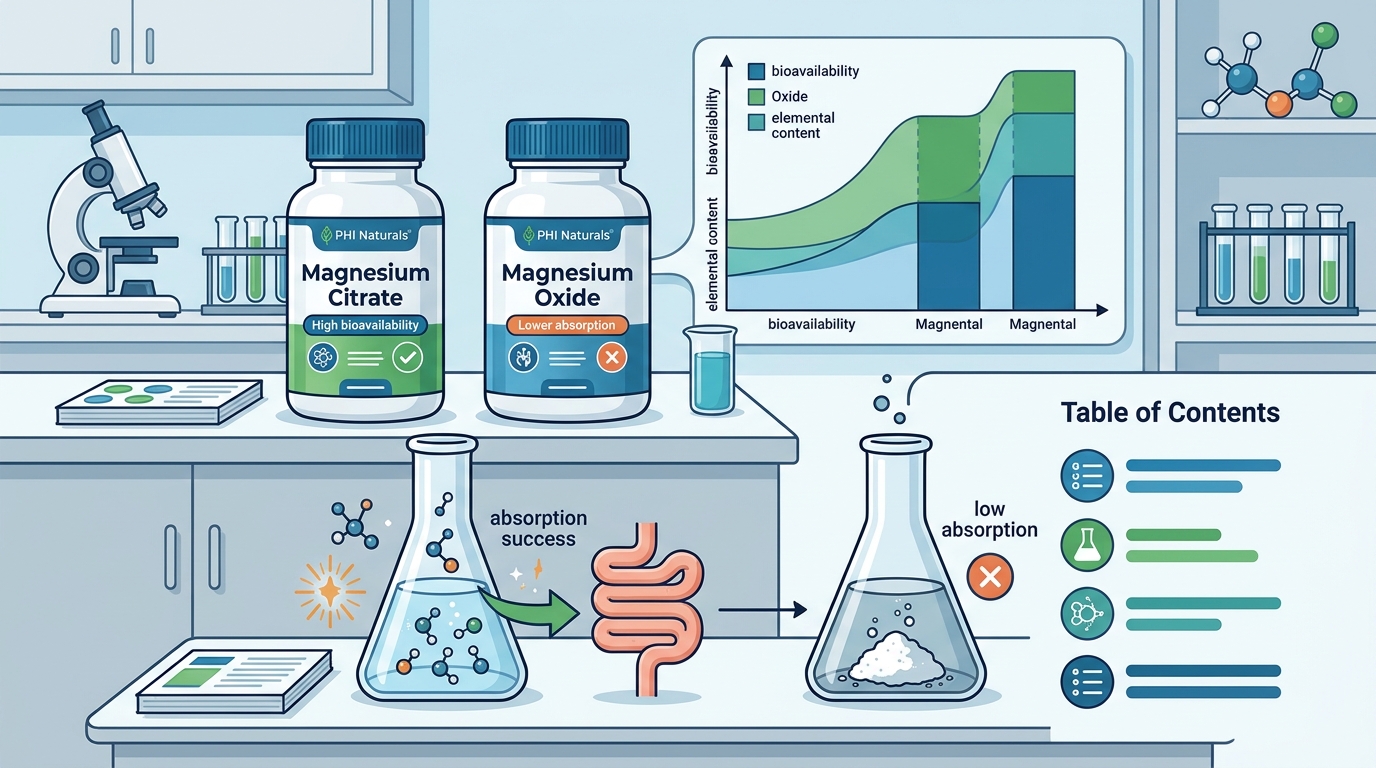
Solubility is the ability of a substance to dissolve in a solvent, such as water or gastric acid. This chemical property is the primary driver of the absorption differences between magnesium citrate and magnesium oxide. Magnesium citrate is an organic salt formed by the reaction of magnesium with citric acid, resulting in a compound that is readily soluble in water.
Magnesium oxide is an inorganic compound that is significantly less soluble. When you take a magnesium oxide supplement, the pill often remains largely intact or dissolves very slowly in the digestive tract. This slow dissolution process means that the magnesium is not fully available for absorption before it moves into the large intestine. In the large intestine, absorption capacity is much lower, and the excess magnesium can draw water into the bowel, leading to loose stools.
Chemical Structure and Digestion
The chemical structure of magnesium citrate allows it to ionize more effectively in the acidic environment of the stomach. This ionization is a prerequisite for transport across the intestinal membrane. Magnesium oxide, being an inorganic salt, does not ionize as readily. The NIH emphasizes that the solubility of the magnesium salt is a key determinant of its bioavailability. Therefore, the chemical nature of the compound directly dictates how well your body can utilize the mineral.
Impact on Digestive Comfort
Because magnesium citrate dissolves and is absorbed more efficiently, less of it remains in the colon to exert an osmotic effect. This makes it generally gentler on the digestive system compared to magnesium oxide. For individuals who are sensitive to laxative effects, the superior solubility of citrate offers a more comfortable daily supplement experience.
Elemental Magnesium Content
Elemental magnesium content is the actual amount of magnesium present in a supplement, excluding the weight of the carrier compound. This distinction is crucial for understanding dosing. Magnesium oxide contains a higher percentage of elemental magnesium by weight compared to magnesium citrate. For example, a 400 mg capsule of magnesium oxide may contain approximately 160 mg of elemental magnesium, whereas a 400 mg capsule of magnesium citrate typically provides around 52 to 56 mg of elemental magnesium.
This difference in elemental content often leads to confusion. Consumers may see a higher number on the label of a magnesium oxide product and assume it is more potent. However, because the bioavailability of magnesium oxide is lower, the actual amount of magnesium absorbed into the bloodstream may be similar to or even less than that from a magnesium citrate supplement. PhiNaturals provides clear labeling on its Magnesium Citrate 400 mg Capsules to help users understand the exact elemental magnesium provided per serving.
Calculating Effective Doses
When selecting a supplement, it is important to look beyond the total weight of the compound. You must consider the elemental magnesium content and the expected absorption rate. A supplement with lower elemental content but higher bioavailability may deliver more usable magnesium to the body than one with higher elemental content but poor absorption. This is why many healthcare professionals recommend organic forms like citrate for general supplementation.
Label Reading Tips
Always check the Supplement Facts panel for the amount of elemental magnesium listed. If the label only lists the total weight of the compound, you may need to calculate the elemental content based on the specific form. For magnesium citrate, the elemental magnesium is roughly 11 to 14% of the total compound weight. For magnesium oxide, it is approximately 40 to 42%. Understanding these percentages helps you make an informed decision about your daily intake.
Laxative Effects
Laxative effects are a common side effect of magnesium supplementation, particularly with forms that have lower bioavailability. Magnesium oxide is well-known for its strong laxative properties. Because it is poorly absorbed, a large amount of unabsorbed magnesium reaches the colon, where it draws water into the bowel through osmosis. This can result in loose stools or diarrhea, especially at higher doses.
Magnesium citrate also has laxative properties, but they are generally milder than those of magnesium oxide. Because citrate is absorbed more efficiently, less of it remains in the colon to cause osmotic water retention. However, individual tolerance varies. Some people may still experience loose stools with magnesium citrate, particularly if they take it on an empty stomach or in high doses. PhiNaturals recommends taking magnesium citrate with food and a glass of water to minimize any potential digestive discomfort.
Managing Digestive Sensitivity
If you are sensitive to laxative effects, starting with a lower dose and gradually increasing it can help your body adjust. Taking the supplement with a meal can also slow down digestion and improve absorption, reducing the amount of magnesium that reaches the colon. If you experience persistent diarrhea, it is advisable to consult with a healthcare professional to determine the appropriate dose or form for your needs.
Choosing the Right Form for Your Goals
If your primary goal is to support bowel regularity, magnesium oxide or high-dose magnesium citrate may be more effective. However, if your goal is to support general health, muscle function, or nervous system calm without significant digestive side effects, a highly bioavailable form like magnesium citrate is often the better choice. The balance between absorption and laxative effect is a key consideration when selecting a magnesium supplement.
Comparison Table
| Feature | Magnesium Citrate | Magnesium Oxide |
|---|---|---|
| Bioavailability | High | Low |
| Solubility | Highly soluble in water | Poorly soluble in water |
| Elemental Magnesium per 400 mg | ~52-56 mg | ~160 mg |
| Laxative Effect | Mild to moderate | Strong |
| Best For | General supplementation, absorption | Constipation relief, high elemental dose |
Key Takeaways
- Magnesium citrate is absorbed more completely than magnesium oxide due to its higher solubility in liquid.
- Bioavailability is the key metric for determining how much magnesium your body actually uses.
- Magnesium oxide contains more elemental magnesium by weight but has lower bioavailability.
- Magnesium citrate is generally gentler on the digestive system than magnesium oxide.
- Always check the Supplement Facts panel for elemental magnesium content, not just compound weight.
- PhiNaturals uses magnesium citrate to maximize absorption and minimize digestive side effects.
- Individual tolerance to laxative effects varies, so start with a lower dose if sensitive.
- Consult a healthcare professional before starting any new supplement regimen.
Frequently Asked Questions
Is magnesium citrate better than magnesium oxide for absorption?
Yes, magnesium citrate is generally better for absorption. The NIH notes that forms of magnesium that dissolve well in liquid, such as citrate, are absorbed more completely than less soluble forms like oxide. This makes citrate a more efficient choice for raising magnesium levels in the body.
Why does magnesium oxide cause more diarrhea?
Magnesium oxide is poorly absorbed, so a large amount of it reaches the colon. In the colon, it draws water into the bowel through osmosis, which can lead to loose stools or diarrhea. Magnesium citrate is absorbed more efficiently, so less of it remains in the colon to cause this effect.
How much elemental magnesium is in 400 mg of magnesium citrate?
400 mg of magnesium citrate typically provides about 52 to 56 mg of elemental magnesium. This is lower than the elemental content of magnesium oxide, but the higher bioavailability of citrate means more of it is actually absorbed and used by the body.
Can I take magnesium citrate on an empty stomach?
You can take magnesium citrate on an empty stomach, but taking it with food may improve absorption and reduce the risk of digestive discomfort. PhiNaturals recommends taking the capsule with food and a glass of water for optimal results.
Is magnesium citrate suitable for vegans?
Yes, PhiNaturals Magnesium Citrate is 100% vegan. The capsules are made from vegetable cellulose (HPMC), and the product contains no animal-derived ingredients. It is also non-GMO, gluten-free, and lactose-free.
How long does it take for magnesium citrate to work?
Where can I buy high-quality magnesium citrate?
You can purchase PhiNaturals Magnesium Citrate 400 mg Capsules directly from MagnesiumCitrate.com. The product is packaged in the USA in a GMP facility and is available in a 6-month supply bottle.
Conclusion
Choosing between magnesium citrate and magnesium oxide comes down to your specific goals and tolerance. If your priority is maximizing absorption and minimizing digestive side effects, magnesium citrate is the superior choice. Its high solubility ensures that more of the magnesium is absorbed into the bloodstream, providing better support for your nervous system, muscles, and bones. PhiNaturals is committed to providing high-quality, bioavailable magnesium supplements that help you achieve your health goals. For more information on magnesium benefits and usage, visit our Learn section or contact our team for personalized advice. Learn more: Contact information MagnesiumCitrate com.